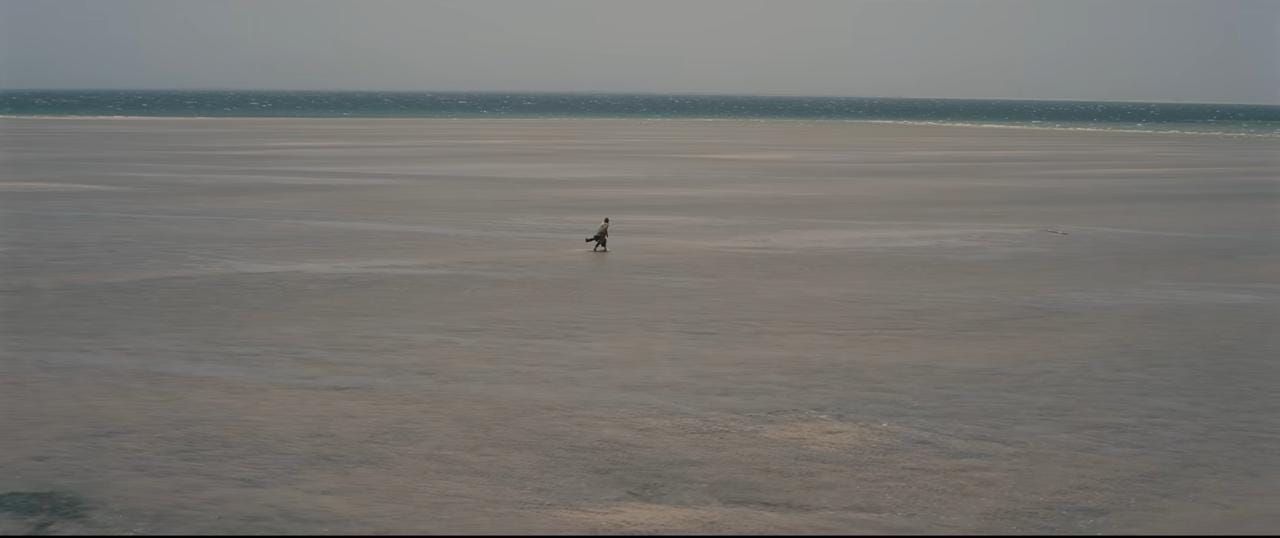
I was fortunate enough to see The Odyssey yesterday.
This story—or, more precisely, this song—did not survive into our time by chance. There is so much that is profoundly human in its characters and plot that sooner or later it leaves its mark on almost every heart. And that mark compels us to retell it to each new generation. Every storyteller approaches the song from their own perspective—just as Homer himself, I imagine, must have done when recounting the myths handed down to him. To my mind, Nolan has managed to reach something very deep at the heart of this story. Here is how I understood it.
The Odyssey is a story about losing one’s home and finding one’s way back. In his retelling, Nolan places particular emphasis on the cause of that loss. The turns of fate may carry us far from our native shore, but we truly lose both the road home and home itself when we refuse to answer for the choices we made under those circumstances. And the only way to find them again is to summon the courage to accept that responsibility.
The harsh truth is that we can reclaim our home—or restore ourselves to it—only by taking responsibility. Yet this harshness is tempered by grace: the door remains open until death.
Every turn of fate, every stroke of good or bad fortune, every wind against us or at our backs—all of this forms the backdrop against which we are relentlessly compelled to choose. Every choice carries a bitter note: the realization of the price it demands. It shapes us, those closest to us, the place we call home, and ultimately the entire world around us.
Awareness of the price exacted by a choice can be agonizing to the point of exhaustion. That is why the Sirens’ song tempts us with the promise of release from such torment in the depths of sweet irresponsibility—a place where no price need be paid. And here is an intriguing question: why did Odysseus need to hear the Sirens when he, too, could have stopped his ears with wax? Nolan offers an answer: “They sang to me of what I once had and what I could never get back…” Odysseus needed to confront the bitterness of what had been irretrievably lost.
Fear of that bitterness drives us to seek oblivion, just as Odysseus sought it in the lotus. The aftermath of battles and losses we no longer wish to remember is buried alive within us and sealed beneath a slab of shame. Thus arises an enduring illusion of home and peace. But little by little, that home turns into a burial ground. Only occasionally does a stray memory disturb what lies buried—like a blow awakening a dull ache in a numb limb we had already forgotten about.
To draw out the hell that torments us from within, we must descend into it, just as Odysseus did. There, we must come face to face with what we have buried, then bring it back into the world and accept our role as co-authors of that world. To do so, we must find the courage to face all its bitterness, including the bitterness for which we ourselves are responsible. We must not become intoxicated with grief—for that, too, is a way of remaining trapped in irresponsibility—but drink its cup once, to the dregs, and then continue on our way.
The world we inhabit rests upon pillars—the values we ourselves create. Like gods, we raise them with our own hands; yet we also possess the monstrous power to destroy them, as Nolan repeatedly reminds us through the image of Athena’s severed head. If we betray someone, we destroy the world in which we can trust others. If we steal from someone, we find ourselves in a world where anyone may steal from us. By violating Zeus’s law of hospitality, we cast ourselves out of our own home.
The harsh truth is that we can reclaim our home—or restore ourselves to it—only by taking responsibility. Yet this harshness is tempered by grace: the door remains open until death. What has been done cannot be undone—but we can always stop running from it, acknowledge it as our own, and accept its consequences. And the courage to do so is found not within ourselves alone, but in those waiting on the other side of the door—those for whose sake we are willing to take responsibility: our loved ones, or even, as in Odysseus’ case, an old dog who waited at the threshold for twenty years and died only after his master finally returned.
P.S. The soundtrack deserves an essay all its own. Listen to the piece that scores the moment when the soldiers emerge from the Trojan Horse to open the gates of Troy to the rest of the army.